
The Bushwick Ridgewood housing market has undergone a dramatic transformation over the past two decades, reshaping how renters, buyers, and investors view these two neighboring Brooklyn and Queens communities. Once overlooked, working-class neighborhoods, both have become focal points for renters, buyers, and investors searching for space, value, and proximity as traditional hotspots grew increasingly unaffordable. What happened here wasn’t random. It followed a familiar New York pattern: rising prices in one neighborhood push demand into the next. First Williamsburg, then Bushwick, and now Ridgewood. But while these neighborhoods are often discussed together, their housing markets have evolved in notably different ways. This post breaks down how Bushwick and Ridgewood changed between 2005 and 2025, what separates them today, and what their trajectories say about where NYC housing demand is heading next.
Bushwich: From Affordable Fringe to Prime Brooklyn Rental Market
In the mid-2000s, Bushwick was still considered an affordable alternative to Williamsburg. Rents were low by Brooklyn standards, vacancy was relatively high, and much of the housing stock consisted of older walk-up buildings and small multifamily homes.
That changed quickly.
As artists, students, and young professionals priced out of Williamsburg moved east, Bushwick absorbed wave after wave of new demand. By the 2010s, rents were rising at one of the fastest rates in the city. Inflation-adjusted median rents climbed sharply over the next decade, far outpacing citywide averages.
Today, Bushwick is no longer a “value neighborhood.” Asking rents for new listings regularly rival those in historically more expensive parts of Brooklyn, and vacancy rates remain extremely tight. Apartments rent quickly, often with multiple applicants, especially near L-train stations like Morgan Avenue and Jefferson Street.
What changed in the Bushwick and Ridgewood housing market?
New development.
Bushwick saw a surge of mid-scale and large rental projects over the past 10–15 years, particularly on former industrial sites and near transit. Modern buildings with amenities like gyms, roof decks, and co-working spaces now sit alongside pre-war rowhouses. This new inventory raised the ceiling on rents and permanently altered the neighborhood’s pricing structure.
Limited rent stabilization.
Because much of Bushwick’s housing stock is in small buildings, a large share of units fall outside rent-stabilization rules. That allowed rents to rise quickly as demand intensified.
Cultural momentum.
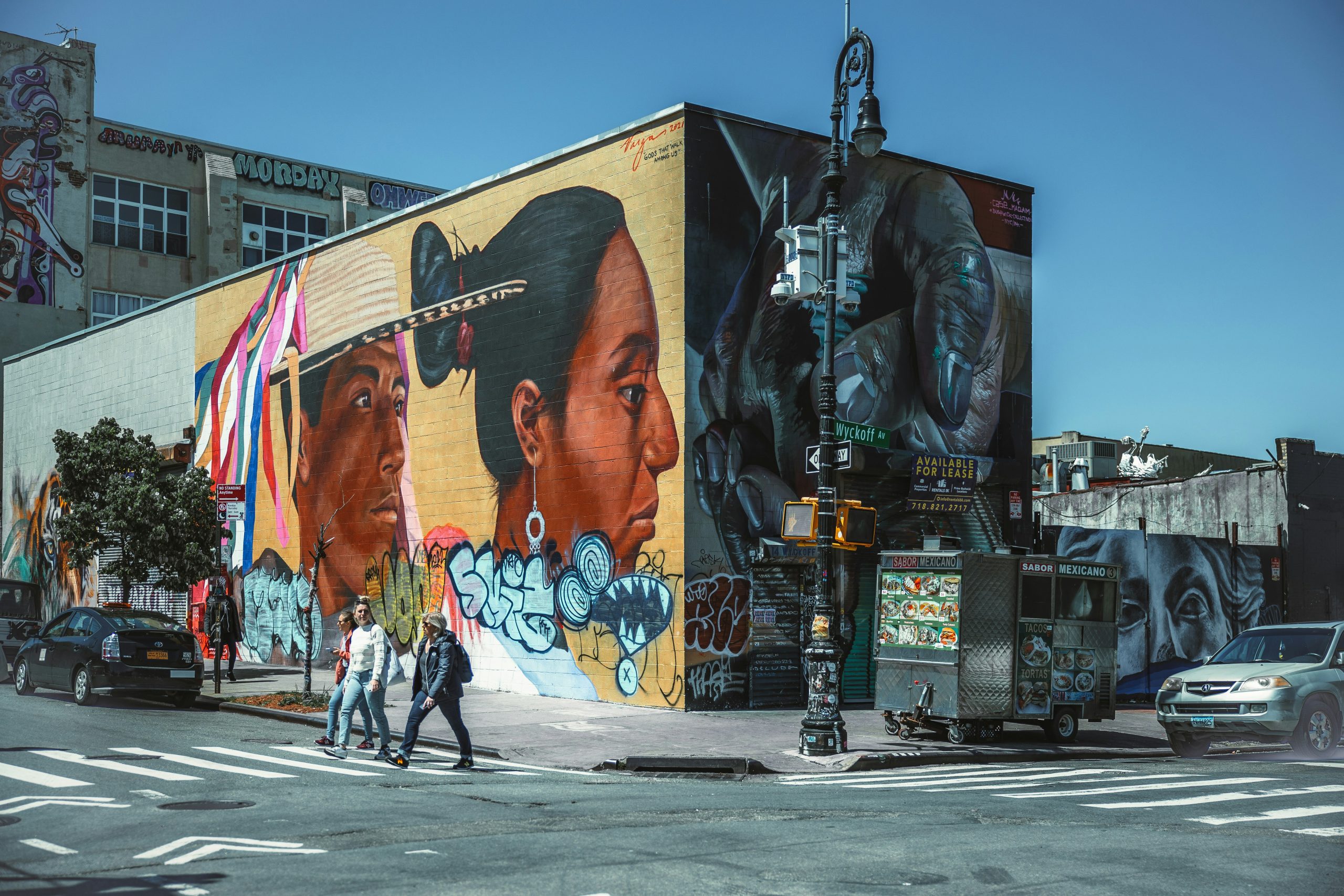
Bushwick’s emergence as a center for nightlife, street art, and creative spaces turned it into a destination neighborhood, not just a fallback option. That visibility reinforced demand and investor interest.
Bushwick today is best described as a mature gentrified market: still desirable, still evolving, but no longer under the radar.
Ridgewood: The Spillover That Became a Market of Its Own
Directly bordering Bushwick, Ridgewood followed a similar path, but at a slower pace.
For years, Ridgewood remained comparatively affordable. Rents rose gradually through the 2000s and early 2010s, and the neighborhood maintained a strong base of long-term residents and family households. That relative stability made it attractive to renters who wanted more space, quieter streets, or a break from Brooklyn’s accelerating prices.
By the late 2010s, however, Ridgewood began to heat up.
As Bushwick rents climbed, more renters crossed the borough line into Queens. Searches for Ridgewood apartments surged, and landlords began pushing rents upward more aggressively. While Ridgewood remains slightly more affordable than Bushwick on average, the gap has narrowed significantly.
Why Ridgewood feels different
Supply constraints.
Ridgewood’s housing stock is dominated by early-20th-century brick rowhouses and low-rise apartment buildings, many of which sit in historic districts. New development is limited by zoning and preservation rules, which means demand tends to push prices up rather than trigger large waves of construction.
Larger units and family housing.
Compared to Bushwick, Ridgewood has more multi-bedroom apartments and fewer luxury micro-units. That has made it attractive to roommates, couples, and families seeking more space.
Later-stage discovery.
Ridgewood’s transformation is newer. Cultural and nightlife venues have appeared more recently, giving the neighborhood the feel of a place in transition rather than one that has already peaked.
Ridgewood today sits at an earlier stage of gentrification than Bushwick did a decade ago, with strong demand and limited new supply shaping its trajectory.

The Eastward Migration Pattern That Shaped Both Neighborhoods
To understand Bushwick and Ridgewood, you have to zoom out.
As Williamsburg gentrified in the late 1990s and early 2000s, renters moved east to Bushwick in search of affordability and space. As Bushwick itself became more expensive, that same dynamic pushed demand into Ridgewood.
This wasn’t just local movement. Many newcomers moved directly from Manhattan or from out of state, drawn by reputations built through word of mouth, media coverage, and cultural visibility. What once required “discovering” now came pre-branded.
The result is a cascading effect:
-
- Williamsburg became prohibitively expensive.
- Bushwick absorbed demand and rapidly transformed.
- Ridgewood followed, benefiting from proximity but constrained by supply.
This pattern continues to define North Brooklyn and western Queens today.
Neighborhood Character: Similar Pressures, Different Feel
While Bushwick and Ridgewood face similar market forces, their day-to-day experience feels different.
Bushwick is denser, louder, and more visibly transformed. New buildings, nightlife, and foot traffic give it the feel of a fully arrived neighborhood.
Ridgewood, by contrast, remains more residential. Many blocks are quiet, lined with historic homes, and anchored by long-standing community institutions. The changes are real, but they’re unfolding more gradually and unevenly.
For renters and buyers, this difference matters just as much as price.
What This Means for Renters, Buyers, and Investors
Renters:
Bushwick offers proximity to nightlife, transit, and new construction but at a premium. Ridgewood offers slightly more space and calm, often at a lower cost, though competition is rising.
Buyers:
Bushwick prices reflect its maturity. Ridgewood, while no longer cheap, may still offer relative upside due to limited supply and continued demand growth.
Investors:
Bushwick has delivered strong returns but carries higher acquisition costs and regulatory complexity. Ridgewood’s constrained inventory and growing popularity make it appealing, though tenant protections and community resistance are important factors.
Looking Ahead
Bushwick and Ridgewood illustrate how New York City evolves: not in leaps, but in waves. As demand shifts outward, neighborhoods change long before the headlines catch up.
For people searching for a home today, understanding these dynamics matters more than ever. Proximity to transit, neighborhood character, housing stock, and supply constraints increasingly shape not just price, but quality of life.
And as the city continues to change, the next “frontier” won’t be found by guessing. It will be found by understanding where people are moving, why they’re moving, and what surrounds the places they choose to live.