
The Whole Foods Ridgewood housing market is entering a new phase as the neighborhood prepares for the arrival of a major grocery anchor. Ridgewood has been trending upward for years. Now it’s getting a milestone amenity that often changes how people price a neighborhood: a Whole Foods Market.
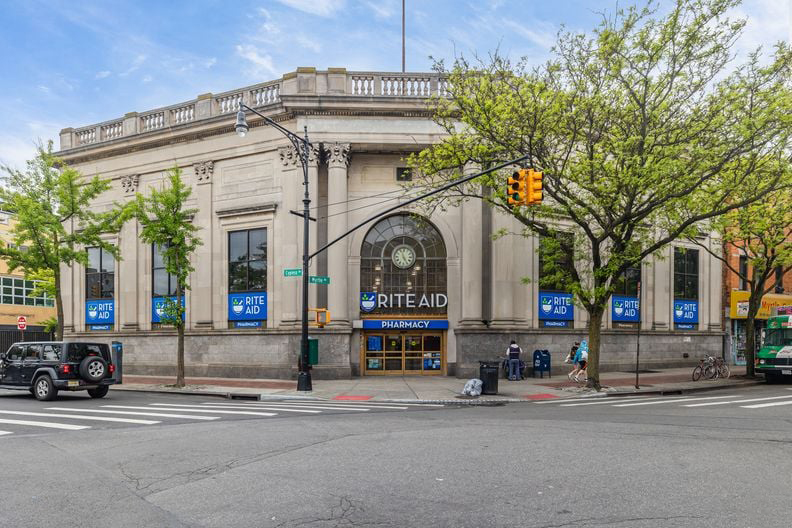
A new Whole Foods is slated for 55–60 Myrtle Avenue in Ridgewood, in a restored bank building, with a 15-year lease and a store footprint reported around 28,000 square feet.
For residents, this is about groceries.
For the housing market, it’s about something bigger: the proximity premium.
Because in NYC, buyers and renters don’t just pay for square footage. They pay for what life feels like within a 5–15 minute walk. That’s the entire nearThere thesis, and Whole Foods is a textbook example of why.
The “Whole Foods Effect” in the Ridgewood housing market
People call it the “Whole Foods Effect”: when a high-end grocer arrives, home values and rents often rise faster nearby. National research and media analysis frequently cite faster appreciation in Whole Foods areas (one widely repeated figure is ~34% average appreciation since purchase in zip codes with Whole Foods).
The nuance matters though:
Whole Foods doesn’t usually create demand.
It confirms demand, and then makes it louder.
In practical terms, it changes the story buyers and renters tell themselves:
- “This area is on the rise.”
- “This is a long-term neighborhood.”
- “This feels like Brooklyn… with more space.”
That narrative becomes pricing power.
Ridgewood was already heating up before the announcement
Your own data snapshot shows Ridgewood was already climbing:
- Median asking rent around $3,250 (2024), up year over year
- Median asking price around $1.295M (2024), also up year over year
- Ridgewood ranked as StreetEasy’s #1 “Neighborhood to Watch” (2024 and again 2025), driven by rising search demand and tightening affordability gaps vs. nearby Brooklyn
So this isn’t a “before and after” story. It’s an “upswing gets reinforced” story.
What happened in similar NYC neighborhoods
Your case studies (Williamsburg, Gowanus, Harlem, Tribeca) show a pattern:
When Whole Foods opens during a neighborhood’s upswing, you often see double-digit rent growth and meaningful home value acceleration around the same era. Your table summarizes the headline changes like:
- Williamsburg rent +17% in the run-up window noted, and major price growth into the 2010s
- Gowanus rent +17% in the year after opening, and price growth in the surrounding years
- Harlem rent +30% in the Whole Foods zip code over the pre-opening window, and condo $/ft growth +41% in the pre-opening window
Tribeca is the counterexample: when a neighborhood is already top-tier, Whole Foods becomes a nice amenity but not a market mover.

Why Ridgewood may see a sharper “proximity premium” than people expect
This is where nearThere’s proximity-based search philosophy really clicks.
People don’t search for “Ridgewood.” They search for:
- “Near the L/M”
- “Near Myrtle-Wyckoff”
- “Near the restaurants I like”
- “Near groceries I trust”
- “Near the version of daily life I want”
Whole Foods becomes a high-signal pin on the map.
And Ridgewood is especially sensitive to these signals because:
- Supply is constrained (historic low-rise stock, limited big new builds)
- It’s a spillover market from Bushwick/Williamsburg demand
- The store location is on Myrtle Avenue, a corridor that already functions like a neighborhood “spine”
In a proximity-first model, that means more buyers/renters will filter for:
- “Within a 10 minute walk of Whole Foods”
- “Within 15 minutes of Myrtle-Wyckoff”
- “Near the Myrtle retail corridor”
That clustering effect can lift comps in a way that looks “sudden,” even when it’s really just search behavior becoming more concentrated.
What this could mean for rents and prices in Ridgewood
No one should promise a precise number here, because broader NYC supply and rate conditions matter. But based on the NYC case patterns you compiled, it’s reasonable to expect:
Rents
- Market-rate units may see additional upward pressure as the area becomes more broadly “approved” by higher-income renters. Your own projection range of roughly 10–20% over a couple of years is plausible as a scenario, not a guarantee.
Home prices
- Higher buyer demand and stronger comps often follow major “arrival” amenities, and studies frequently cite a premium near high-end grocery anchors, though causation is tricky.
The biggest practical change may be listing language:
“Near Whole Foods” becomes shorthand for “this area is safe, convenient, and trending.”
That is literally proximity-as-value.
Why this is exactly what nearThere is built for
Neighborhoods don’t change all at once. They shift around moments, amenities, and daily-life anchors that signal where demand is heading next.
A new Whole Foods is one of those signals. It reshapes how people experience a place, how they talk about it, and ultimately how they value living nearby.
nearThere is built around this reality. Instead of starting with a listing and guessing whether it fits your life, nearThere lets you start with what matters most and see the homes that surround it. Proximity isn’t a detail. It’s the driver.