Ridgewood had already become a closely watched housing market before reports of a future Whole Foods Market. The planned store adds a high-profile daily-life anchor to an existing story about demand, limited supply, and the narrowing affordability gap between western Queens and nearby Brooklyn.
For residents, the immediate subject is groceries. For home search, the more interesting question is how a recognizable destination changes the way people compare locations within the neighborhood.
The planned Myrtle Avenue location
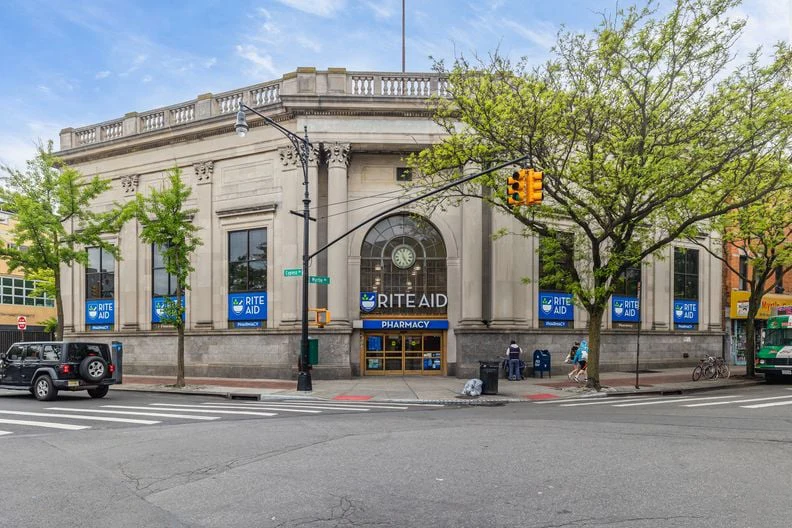
The reported plan places the store at 55–60 Myrtle Avenue in a restored bank building. Queens news coverage described a long-term lease and a store footprint of roughly 28,000 square feet. This article continues to treat that address as a planned location. The searches below use the supported Whole Foods Market brand filter rather than claiming that the future store is already an open, verified point of interest.
Top-rated homes in Ridgewood near the L train.
The first row shows current homes for sale and the second shows current rentals. Each collection applies both the Ridgewood neighborhood and L-train proximity filters, then ranks the results by listing score and recency.
Ridgewood
LWithin 0.25 miles of the L lineFor sale
Loading current homesFor rent
Loading current homesWhy grocery proximity can matter to a home search
People rarely experience a neighborhood only as a name or polygon. They experience the walk to groceries, the route to transit, the places used after work, and the errands that repeat every week. A major grocery store can become shorthand for one of those routines.
That does not mean the store created the demand. In a neighborhood already receiving more search interest, it may confirm the demand and concentrate attention around a particular corridor. Listings may eventually use “near Whole Foods” as a legible location reference in the same way they mention a subway stop or park.
Ridgewood was already moving before the announcement
The original article cited 2024 StreetEasy figures of roughly $3,250 for median asking rent and $1.295 million for median asking price, along with Ridgewood’s placement on StreetEasy neighborhood watch lists. Those figures belong to a dated market snapshot, not a current-price promise.
The durable takeaway is simpler: Ridgewood’s housing conversation was already being shaped by search demand, relative value, low-rise housing stock, historic districts, and spillover from higher-cost Brooklyn neighborhoods. A new retail anchor enters that context; it does not replace it.
What comparable “Whole Foods effect” stories can and cannot show
Real-estate coverage has often described a “Whole Foods effect,” connecting high-end grocery openings with stronger nearby appreciation. Comparable New York neighborhoods are useful context, but they do not prove that a single retailer caused a price change. Stores frequently choose locations where demand and investment are already visible.
For Ridgewood, the most defensible expectation is a change in the way some renters and buyers frame their searches. More people may compare homes by walking relationship to Myrtle Avenue, Myrtle–Wyckoff transit, groceries, restaurants, and other daily stops. Whether that attention produces a measurable premium depends on the market at the time.
A practical way to use this information
Treat the future store as one possible anchor, then compare it with the full routine. A home near Myrtle Avenue may be convenient for groceries but less convenient for another priority. The right test is not simply “near Whole Foods”; it is whether the collection of nearby places works together.
Sources and update notes
Information reviewed through May 19, 2026.
This migration preserves the original article’s dated market context while separating reported facts from scenarios. Current listing and exact-POI modules should be added only after their criteria are verified in nearThere data.

Bushwick and Ridgewood: Two Neighboring Housing Markets
How housing stock, development patterns, transit, and neighborhood character shaped different market paths in Bushwick and Ridgewood from 2005 through 2025.

Best Schools in NYC: A Public and Charter School Search Guide
Explore 54 public and public charter schools across New York City, then move directly into current homes near each school with nearThere search links.
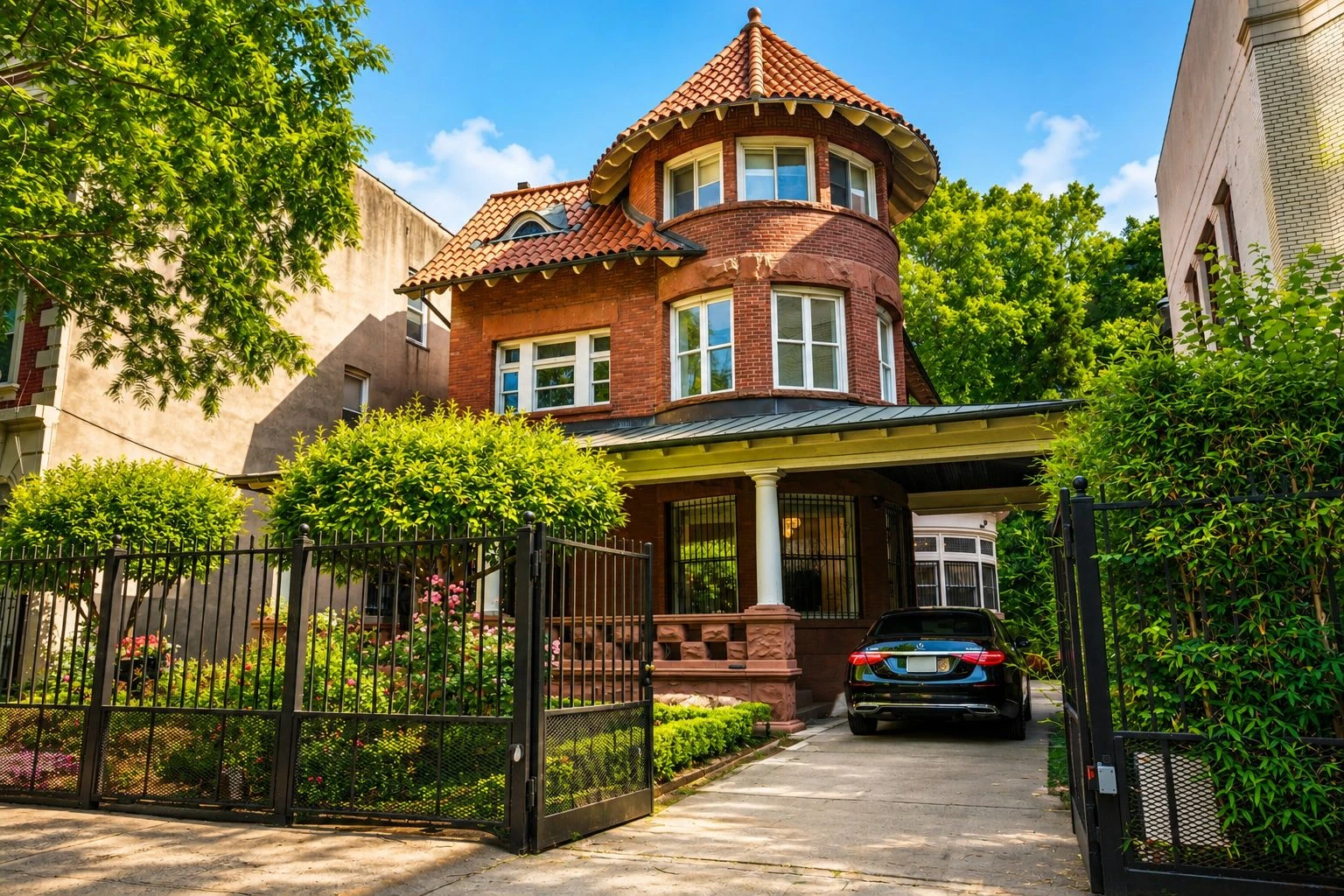
1094 Park Place: Stained Glass Windows and Ornate Wood Paneling in Crown Heights
Step inside 1094 Park Place, then use its defining architectural details to explore current homes with a similar look.